From Mapping to Action: A 6‑step Approach to Embed Climate‑smart Advice in AKIS

Author/s:

Benefits of the Practice

Ensures all relevant actors are mapped and engaged
Focuses resources on the most influential and interested stakeholders
Provides a clear, repeatable process for national and regional coordinators
English language

Summary for Practitioners on the Main Finding/s or Innovative Solution/s

Engagement with key actors within the national Climate Smart Agricultural Knowledge and Innovation System (CS-AKIS), including farmers, advisors, researchers, policy makers, technology providers, and the general public, is essential for the successful implementation of climate-smart advising and farming. It fosters co-creation and mutual learning, thereby strengthening advisors’ capacity to provide climate-smart advice.

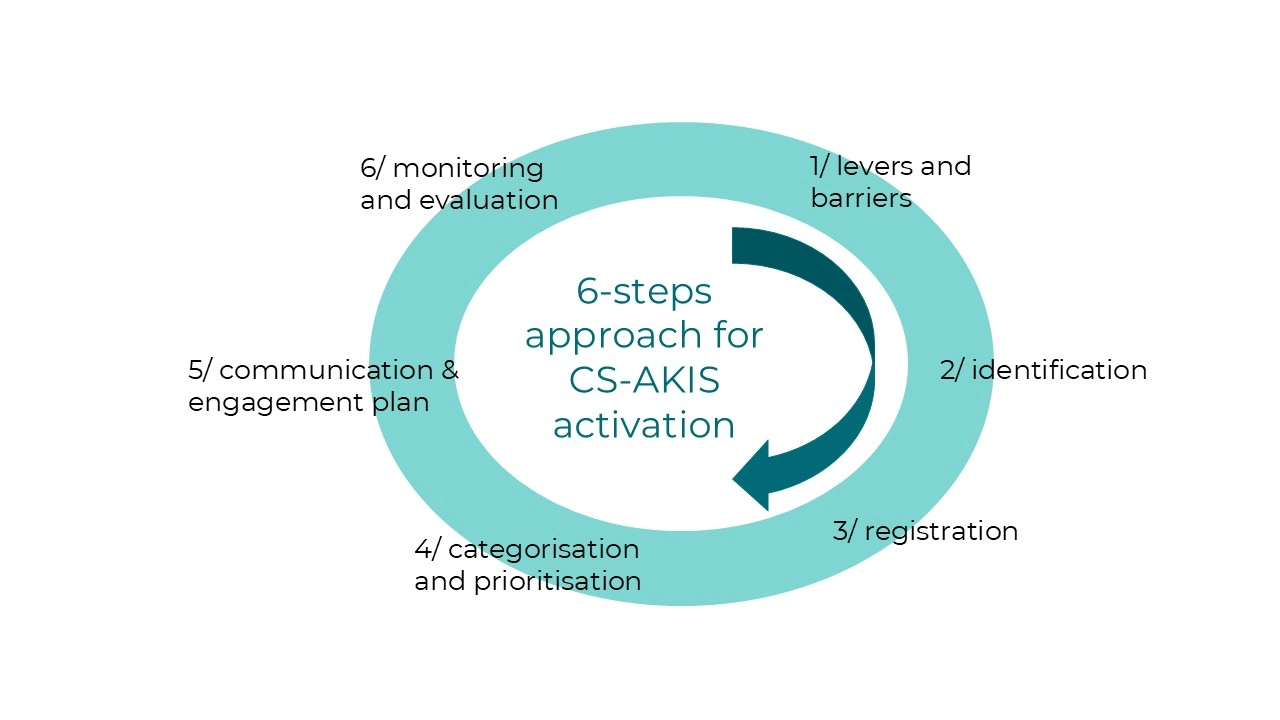
The CSA project therefore developed a 6-step approach for National Coordinators and Climate Smart Coaches to activate and engage CS-AKIS actors.
1. Levers and barriers: First, analyse levers and barriers using tools like PESTLE to understand the enabling and limiting factors for climate action in agriculture. This precedes actor identification, as it clarifies the context in which CS‑AKIS actors operate and helps determine which actors are most relevant to engage.
2. Identification: Next, identify CS-AKIS actors – individuals and organisations who influence or are impacted by climate-smart farming.
3. Registration: Register their contact and expertise details.
4. Categorisation and prioritisation: Categorise and prioritise these actors using a Stakeholder Analysis Matrix, focusing resources on those with the highest interest and influence.
5. Communication and engagement plan: Develop a tailored plan, selecting appropriate activities and channels for each actor group, such as workshops for key influencers and newsletters for passive stakeholders.
6. Monitoring and evaluation: Finally, monitor and evaluate engagement activities, adapting the plan based on feedback and changing circumstances.

This structured approach goes beyond merely listing CS-AKIS actors. It involves analysing and understanding them, which is crucial for developing tailored communication and engagement strategies. Additionally, this approach aids in risk management by anticipating stakeholder impacts, allowing proactive addressing of concerns, and leveraging opportunities.

Native language

Betrokkenheid van sleutelactoren binnen het nationale Klimaatslim Agrarische Kennis- en Innovatiesysteem (CS-AKIS) —zoals boeren, adviseurs, onderzoekers, beleidsmakers, technologieaanbieders en het brede publiek— is essentieel voor de effectieve implementatie van klimaatslim advies en klimaatslimme landbouw. Deze betrokkenheid bevordert co-creatie, wederzijds leren en kennisuitwisseling, en versterkt zo de capaciteit van adviseurs om klimaatslim advies te geven. Bovendien faciliteert het de opschaling van de resultaten van het CSA-project en draagt het bij aan de inbedding van het CSA-netwerk en de resultaten binnen CS-AKIS, zowel tijdens als na afloop van het project.

Het CSA-project ontwikkelde daarom een 6-stappenplan voor Nationale Coördinatoren en Klimaatslimme Coaches om CS-AKIS actoren te activeren en engageren. Eerst worden hefbomen en barrières geanalyseerd met tools zoals PESTLE om de factoren te begrijpen die klimaatactie in de landbouw beïnvloeden. Dan worden CS-AKIS-actoren—individuen en organisaties die invloed hebben op of beïnvloed worden door klimaatslimme landbouw— geïdentificeerd en geregistreerd. Deze actoren worden gecategoriseerd en geprioriteerd met behulp van een Stakeholder Analyse Matrix, met de focus op degenen met de meeste interesse en invloed. Daarna wordt een op maat gemaakt communicatie- en engagementplan ontwikkeld, met passende activiteiten en kanalen voor elke groep, zoals workshops voor sleutelfiguren en nieuwsbrieven voor passieve stakeholders. Tot slot worden deze activiteiten gemonitord en geëvalueerd, en wordt het plan aangepast op basis van feedback en veranderende omstandigheden.

Deze gestructureerde aanpak gaat verder dan het enkel in kaart brengen van CS-AKIS-actoren. Het gaat om het analyseren en begrijpen van deze actoren, wat cruciaal is voor het ontwikkelen van gerichte communicatie- en engagementstrategieën. Het ondersteunt ook het risicomanagement door het proactief aanpakken van zorgen en het benutten van kansen.