Building Climate-Smart Advisory Capacity in Serbia: Enhancing Soil Health and Biodiversity through Regenerative Agriculture Practices

Author/s:

Benefits of the Practice

Improved soil health
Enhanced advisor capacity for climate-smart practices
Increased adoption of regenerative agriculture
English language

Summary for Practitioners on the Main Finding/s or Innovative Solution/s

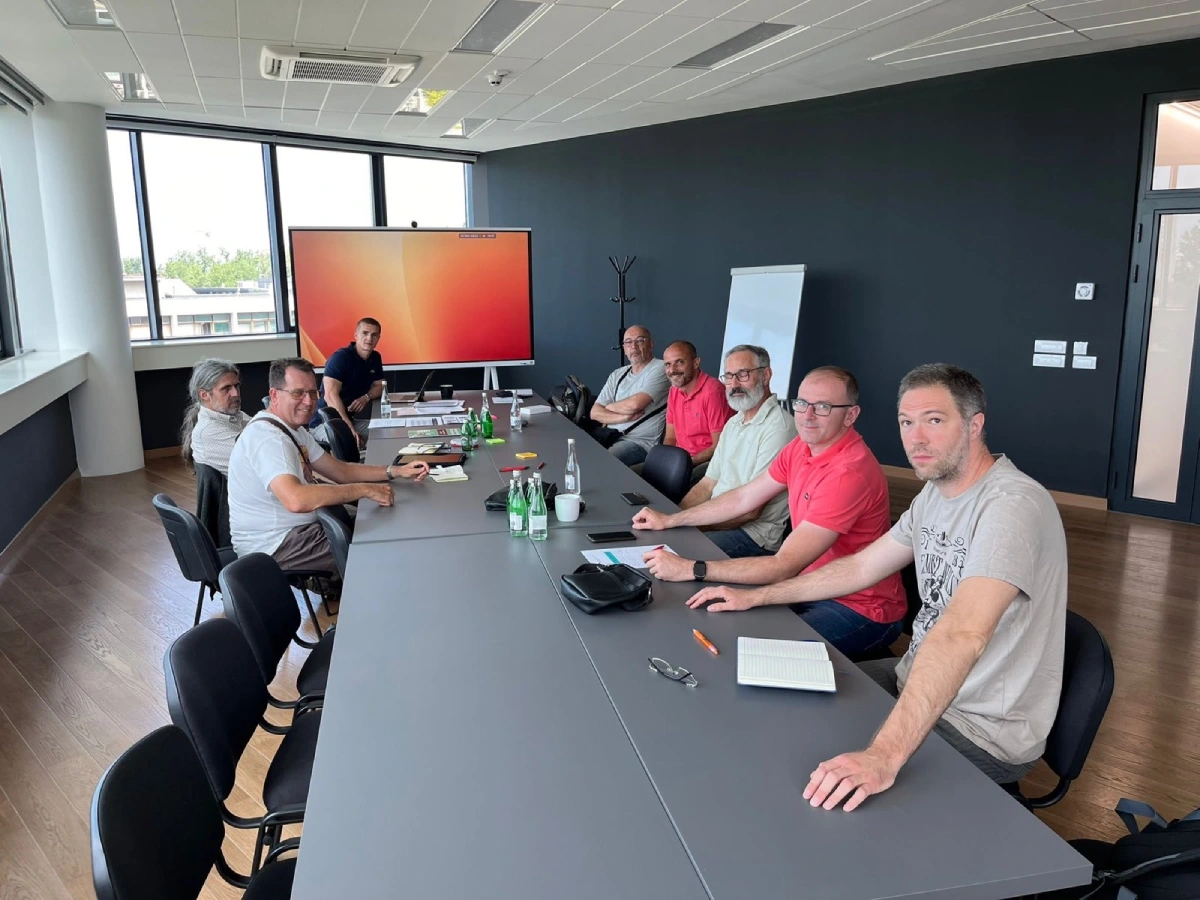
The ClimateSmartAdvisors project facilitates the establishment of advisory Communities of Practice (CoPs), active for a period of at least two years, to strengthen advisors’ capacities to recognize and address the impacts of climate change on farming systems.
In Serbia, the first CoP focused on soil health and biodiversity, acknowledging these as key resources for long-term climate resilience, with particular emphasis on regenerative agriculture as an innovative and sustainable approach to soil management. Since regenerative agriculture remains uncommon in Serbia and has not yet been formally recognized or supported through national strategies or subsidy schemes, the CoP prioritized fostering direct engagement between advisors and pioneering farmers cultivating arable crops, as well as practitioners actively implementing regenerative methods, including no-till and strip-till practices, cover crops, and flower strips.
Field visits to these farms enabled hands-on learning, exposure to real-life challenges, and direct exchange of experiences with practitioners. As tangible outputs, the CoP will develop a practical advisory manual for climate-resilient agriculture, providing guidance and concrete recommendations for implementing regenerative practices, and produce a video material promoting climate-smart farming to raise awareness among a broader audience about alternative soil conservation methods.

Multi-actor engagement with academia, industry representatives, and environmental organizations offered a broader understanding of barriers to adopting climate-smart practices. Based on these interactions, concrete steps were identified to support wider uptake, including capacity-building activities for advisors and farmers, design of incentive mechanisms, and policy recommendations. Overall, the CoP provided actionable outputs, practical learning opportunities, and a foundation for scaling regenerative and climate-resilient farming practices in Serbia.

Native language

Projekat ClimateSmartAdvisors omogućava uspostavljanje savetodavnih Zajednica prakse (CoP), koje će biti aktivne najmanje dve godine, sa ciljem jačanja kapaciteta savetodavaca za prepoznavanje i rešavanje uticaja klimatskih promena na poljoprivredne sisteme. U Srbiji, prva CoP je bila fokusirana na zdravlje zemljišta i biodiverzitet, prepoznajući ih kao ključne resurse za dugoročnu otpornost na klimatske promene, sa posebnim naglaskom na regenerativnu poljoprivredu kao inovativni i održivi pristup upravljanju zemljištem. S obzirom na to da se regenerativna poljoprivreda još uvek retko primenjuje u Srbiji i da još nije formalno priznata niti podržana kroz nacionalne strategije ili subvencione šeme, CoP je prioritetno usmerena na uspostavljanje direktne saradnje između savetodavaca i pionirskih poljoprivrednika u ratarskim kulturama, kao i praktičara koji već primenjuju regenerativne metode, uključujući sistem bez oranja i sistem traka, setvu pokrovnih useve i cvetnih pojaseve. Terenske posete ovim farmama omogućile su praktično učenje, uvid u stvarne izazove i direktnu razmenu iskustava sa praktičarima. Kao opipljiv rezultat, CoP će razviti praktični priručnik za savetodavni rad u oblasti klimatski otporne poljoprivrede, koji će pružiti smernice i konkretne preporuke. Angažovanje više aktera, uključujući akademsku zajednicu, predstavnike industrije i organizacije koje se bave zaštitom životne sredine, omogućilo je širi uvid u prepreke za usvajanje praksi klimatski pametne poljoprivrede. Na osnovu ovih interakcija identifikovani su konkretni koraci za podršku širem prihvatanju, uključujući aktivnosti za jačanje kapaciteta savetodavaca i poljoprivrednika, izradu stimulativnih mehanizama i preporuke za politike. Ukupno, CoP je omogućila primenjive rezultate, praktične mogućnosti učenja i osnovu za širenje regenerativnih i klimatski otpornijih poljoprivrednih praksi u Srbiji.

Additional Information

Obstacles: Key barriers include the limited recognition of regenerative agriculture in national policies, absence of dedicated subsidies or incentive schemes, and the generally low awareness of alternative soil management practices among conventional farmers. Access to relevant data and practical examples remains uneven, and scaling up innovations is constrained by institutional and regulatory gaps.
Future actions/research: To further strengthen the adoption of climate-resilient practices, future efforts should focus on expanding multi-actor networks, documenting and disseminating practical case studies, and developing locally adapted guidance for farmers. Research could explore cost-benefit analyses of regenerative practices and their impact on soil health, biodiversity, and productivity under climate variability. Policy engagement is needed to design support mechanisms and incentives that reward sustainable farming practices.
Messages to end-users: Advisors and farmers are encouraged to engage in peer-to-peer learning, experiment with regenerative approaches on a small scale, and actively participate in networks that connect practitioners, researchers, and policymakers. Incremental changes, guided by practical knowledge and evidence, can build resilience while promoting ecological and economic sustainability.

Regenerative Agriculture in Practice – Advisory manual for Advisors, CSA promo video