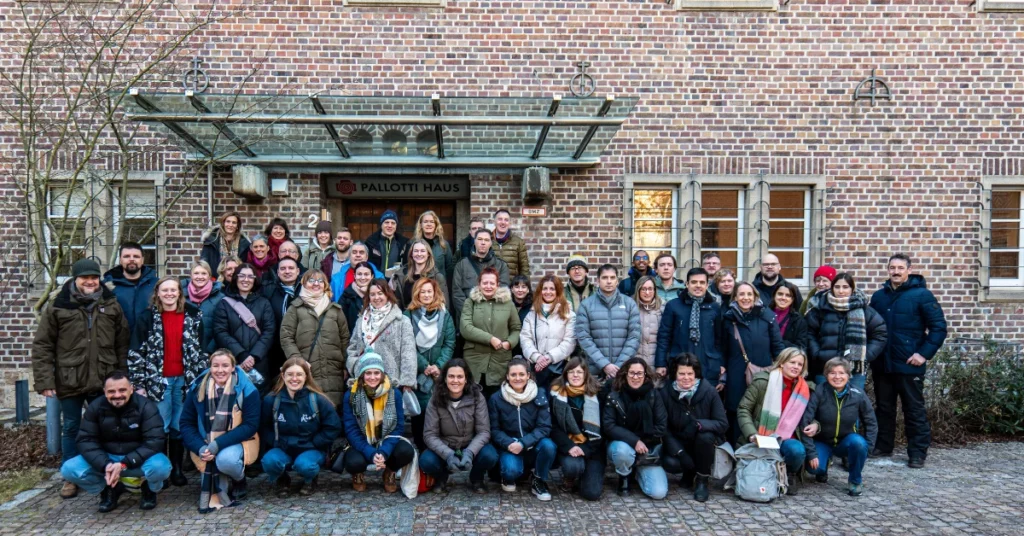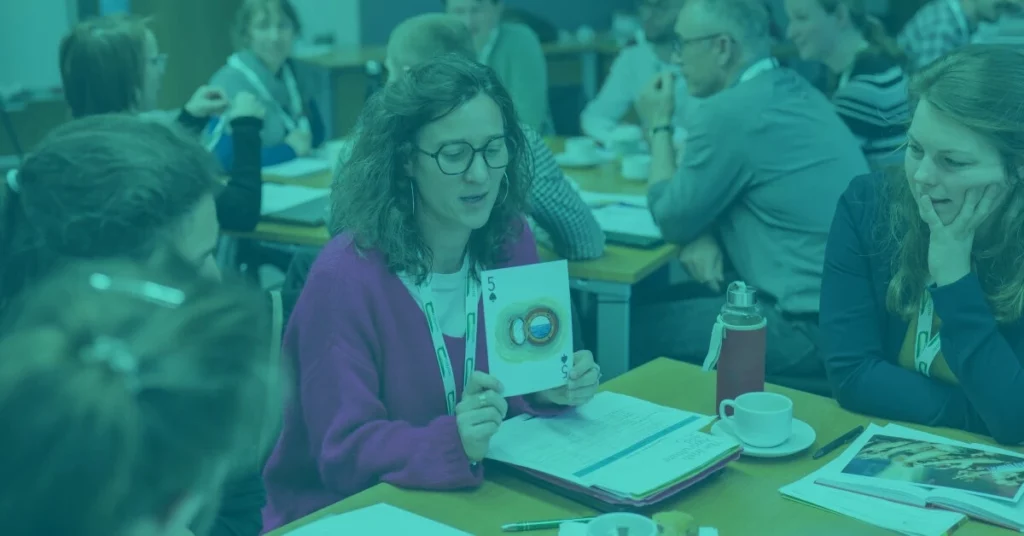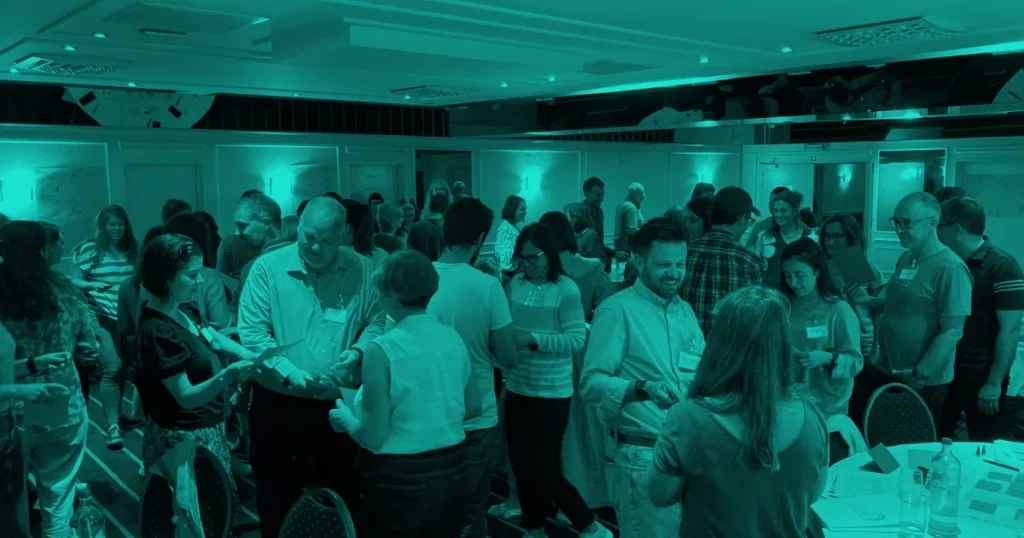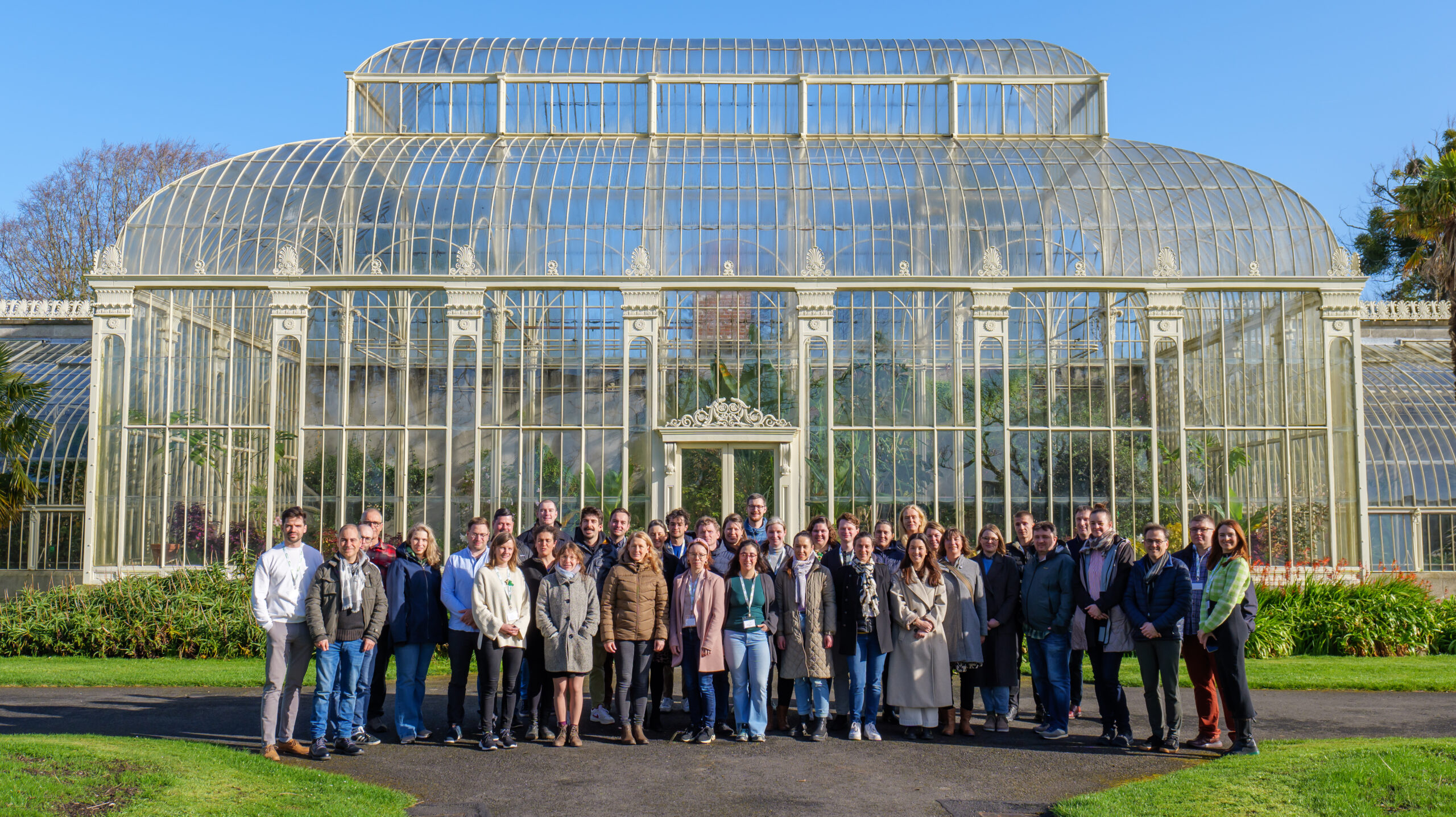
The first wave of Communities of Practice (CoPs) within ClimateSmartAdvisors has shown that advisors learn best when climate-smart agriculture is discussed through real advisory challenges, practical tools and peer exchange. The findings confirm that the Communities of Practice approach has worked as a practical learning model. Communities of Practice in ClimateSmartAdvisors are conceptualized as small groups of 6 advisors who engage themselves for 2 years to develop their capacity in providing climate smart advice. They choose a set of objectives and learning questions themselves, based on climate-related advisory challenges they meet in their own local context.
In total, 40 ClimateSmartAdvisors Communities of Practice were active across Europe, involving more than 300 advisors, who attended more than 300 Communities of Practice meetings in 2 years. Beyond these figures, the first wave provides an important insight: climate-smart advice cannot be reduced to technical recommendations alone. Advisors need technical knowledge, but also communication skills, decision-support tools and strong professional networks to support farmers in making context-specific decisions.
Learning questions rooted in advisory practice
The Communities of Practice explored a broad range of learning questions, with a strong focus on farm-level and advisory-level challenges. These questions were grouped around four main areas: advisory and communication, technical and agronomic issues, decision support, and system-level organisation.
Some Communities of Practice asked how advisors can better engage farmers, address resistance to climate topics and show the opportunities and benefits of climate-smart farming. Others focused on practical farming measures, including irrigation practices for almond cultivation, strategies for reducing enteric methane emissions in ruminants, soil humus enrichment and water, nutrient and soil management.
Several questions also focused on capacity development, including how to support learning between farmers, advisors and countries, how to involve policymakers and administrative staff, and how to keep Climate Smart Advisors engaged over time.
This diversity reflects the complexity of climate-smart advisory work. Advisors are not only expected to know what works technically. They also need to understand how to communicate recommendations, select suitable tools, work with different actors and adapt advice to each farm context.
From fixed answers to practical judgement
One of the key lessons from the first Communities of Practice wave is that Communities of Practice do not always produce fixed answers. Instead, they help advisors build the professional judgement needed to deal with complex and farm-specific situations.
Findings from reports show that Communities of Practice produced contextual answers, principles and guidance, tools and frameworks, as well as methods and process insights. In practice, this means that answers often took the form of “it depends on the farm, but this is how to approach it.”
This is particularly important for climate-smart agriculture, where soil type, farm structure, economic conditions, farmer motivation, available data and policy frameworks all influence what can realistically be implemented. The Communities of Practice therefore helped advisors move from general climate-smart concepts towards more practical, farm-sensitive advisory approaches.
Stronger advisory capacity and confidence
One of the main outcomes of the first CoP wave was the strengthening of advisory capacity and technical expertise. Across the CoP evaluations, advisors reported that the content was highly relevant, that they had deepened their understanding of climate-smart agriculture principles and specific technical topics, and that they felt more confident in their role as Climate Smart Advisors.
A general learning across the first wave was that climate-smart advice becomes more effective when it is connected to farmers’ practical realities. In particular, several CoPs highlighted the importance of framing climate-smart measures not only through climate or policy objectives, but also through profitability, efficiency and business resilience. This helped advisors better address farmer questions and resistance, and to present climate-smart agriculture as part of farm performance and long-term viability.
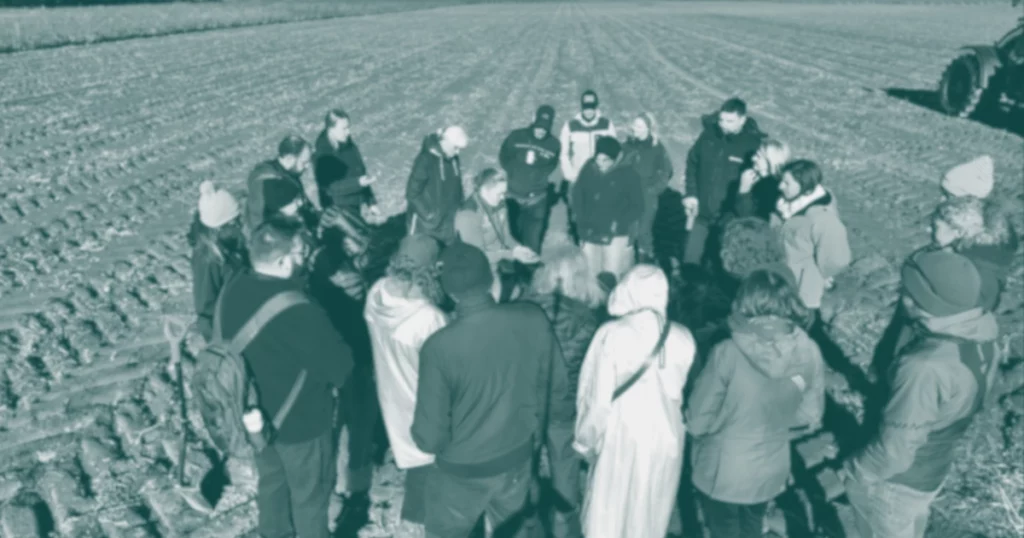
Within this broader trend, individual CoPs also generated more specific technical and methodological learning. For example, some CoPs focused on soil-related advisory work, where advisors improved their skills in soil health assessment, including interpreting analysis results and using pit tests. These activities supported more holistic soil management approaches, linking efficient fertilisation with reduced emissions. Other CoPs worked on climate communication and behavioural aspects, including the use of the “Farmer’s Journey” framework to better understand the factors influencing farmer decision-making.
The evaluation feedback illustrates this wider development in advisory confidence. In Germany, advisors reported feeling more secure in using climate-smart advisory knowledge and skills. In Finland, CoP members highlighted increased competence and confidence in providing climate-related advisory services. In Spain, advisors noted that gaining knowledge about climate-smart agriculture helped them advise with more confidence.
Practical tools and resources developed
The first Community of Practice wave also produced tangible advisory outputs. Communities of Practice created, tested or implemented manuals, handbooks, decision-support tools and communication materials.
Examples include a Manual of Good Practices for Mediterranean protected cultivation and summary leaflets on relevant regulations in Spain, a Manual on Water Management in Almond Orchards in Portugal, a handbook for selecting cover crops based on soil type and nitrogen release in the Netherlands, and fertilisation recommendations and a climate-smart soil consulting framework in Poland, and handouts for climate-smart measures in Germany.
Several decision-support tools were also developed or applied, including an Excel-based calculation tool and fertilisation plan template in Spain, the NDICEA tool for nitrogen dynamics in the Netherlands, AgroforesTreeAdvise as a tree species selection tool in Czechia, and the CoolFarmTool for carbon balance calculations in Spain.
Communication materials were another important output, including social media infographics, a Practice Abstract on storytelling, videos, mental cards and technical materials on methane emissions.
These outputs show that Communities of Practice are not only spaces for discussion. They can also generate practical materials that advisors can use directly in their work with farmers.
Stronger networks and collaboration
The Communities of Practice also strengthened professional networks, confirming that Communities of Practice can act as hubs for professional connection, supporting collaboration within and between organisations. They created spaces for peer support, knowledge exchange, cooperation between advisors who may not usually work together, and multidisciplinary connections between advisors, researchers and policymakers.
The evaluation examples show the value of this network-building role. In Italy, exchanges with large companies helped participants expand their contacts and opened possibilities for future collaboration. In Spain, one Community of Practice created a strong advisory network and a shared knowledge base expected to continue beyond the first wave. In Denmark, advisors reported that they would feel more comfortable contacting peers from other companies. In Luxembourg, the Community of Practice contributed to the establishment of a national stakeholder network and improved national cooperation.
Moving from learning to wider use
The first wave also showed promising signs of valorisation, with Community of Practice outcomes already being used in daily advisory practice, disseminated or embedded in advisory organisations.
Some tools are now being applied in daily advisory practice. In Spain, advisors adopted the CoolFarmTool for carbon balance calculations with farmers, promoted no-till farming where possible and adjusted fertilisation more precisely to crop needs. In the Netherlands, advisors from DLV, Delphy and ZLTO are better equipped to use the NDICEA tool and a cover crop selection handbook for data-based advice. In Finland, Community of Practice members plan to apply their new competencies in NIR analysis interpretation and soil health assessment with clients.
Other outputs are being prepared for wider dissemination. The Portuguese Manual on Water Management in Almond Orchards is being prepared for national use, while Dutch good practices on NDICEA are planned for dissemination through national training events. In Spain, the Manual of Good Practices for Mediterranean protected cultivation will be shared through advisory networks and professional associations.
Some outcomes are also becoming part of organisational practice. In Poland, a climate-smart soil consulting framework is being integrated into the advisory portfolio of KPODR Minikowo. In Belgium, storytelling tools are being included in training for advisors in a Belgian farmers’ union. In France, Community of Practice content is being reused in farmer and advisor training, as well as in strategic reflection bodies.
Key lesson: richer learning now needs clearer synthesis
The first Community of Practice wave showed clear strengths. It embraced complexity, remained grounded in real advisory challenges and helped advisors build confidence, skills and professional judgement.
At the same time, the results point to areas for further improvement. Future Community of Practice work should support sharper learning questions, making them more specific, actionable and answerable. It should also strengthen synthesis, so that insights from rich discussions are translated into clear, practical takeaways. Finally, future Community of Practice work should build continuity by following up on open questions and deepening system-level learning, ensuring that insights from the first wave are not treated as isolated outcomes but as a basis for further advisory capacity development.
Overall, the first wave confirms the value of Communities of Practice as a model for climate-smart advisory capacity development. They help advisors move from knowledge to practice, from individual learning to peer exchange, and from isolated outputs to tools and networks that can support wider change.
The main message is clear: climate-smart agriculture needs advisors who are technically prepared, confident in communication, connected to peers and able to adapt advice to each farm context. The first Community of Practice wave has made a strong contribution to building that capacity across Europe.