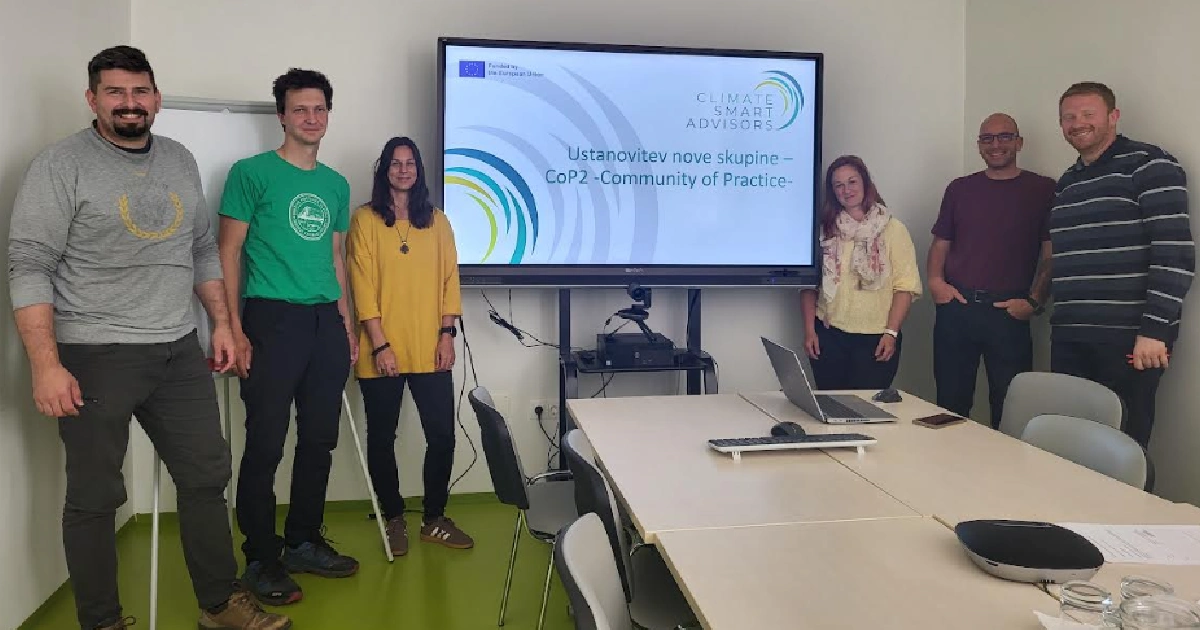
Analysis of barn types and the adaptation of agricultural buildings to climate change

Country
Slovenia

Thematic Areas

Herd Management

Description

Climate change is creating new challenges for livestock farming, including increasing heat stress, changing environmental conditions in animal housing, higher disease risks and the need to reduce emissions while maintaining animal welfare and farm productivity.

This Community of Practice (CoP) brings together agricultural advisors, researchers and practitioners to exchange knowledge and practical experience on climate-smart adaptation of agricultural buildings and livestock housing systems. The CoP focuses on understanding how different barn designs and housing systems influence environmental conditions, ammonia emissions, animal welfare, animal health and the resilience of livestock production under changing climatic conditions.

Our objective is to strengthen the capacity of agricultural advisors by providing evidence-based knowledge, practical tools and examples of good practice that can be transferred to farmers. Through collaboration and peer learning, the CoP will identify innovative solutions to reduce heat stress, improve barn microclimate, enhance animal welfare and support sustainable, climate-resilient livestock farming.

By building a strong network of advisors and experts across Europe, the CoP aims to accelerate the adoption of climate-smart advisory services and farming practices, helping livestock farmers adapt to climate change while improving environmental performance and the long-term sustainability of their farms.

Objectives

The specific objectives are to:

  • Improve advisors’ knowledge of climate-smart livestock building design and adaptation measures that enhance resilience to increasing temperatures and extreme weather events.
  • Assess how different barn types and housing systems influence environmental conditions, ammonia emissions, animal welfare and the occurrence of diseases.
  • Exchange practical experiences and innovative solutions for reducing heat stress through climate-smart building design, ventilation, insulation, roof solutions and other adaptation measures.
  • Promote the use of environmental monitoring and data-driven decision-making to improve housing conditions and reduce the environmental impact of livestock production.
  • Develop practical advisory recommendations and best practices that support farmers in implementing climate-smart livestock housing and management systems.
  • Foster collaboration among advisors, researchers, farmers and other stakeholders to accelerate the uptake of climate-smart farming practices across Europe.
Facebook
LinkedIn
Threads
X
Email
Print
Manure Storage and SpreadingAdditives for Reducing Enteric Methane EmissionsHerd Management
Coach:
Rewarding MechanismsHerd Management
Coach:
Agroforestry and Relation to Landscape
Coach:
Soil Health and BiodiversityManure Storage and SpreadingCrops Management
Coach:
Forage ProductionGrassland ManagementRewarding MechanismsManure Storage and Spreading+ 1 more